

Micro-frontends solve an org problem, not a tech one
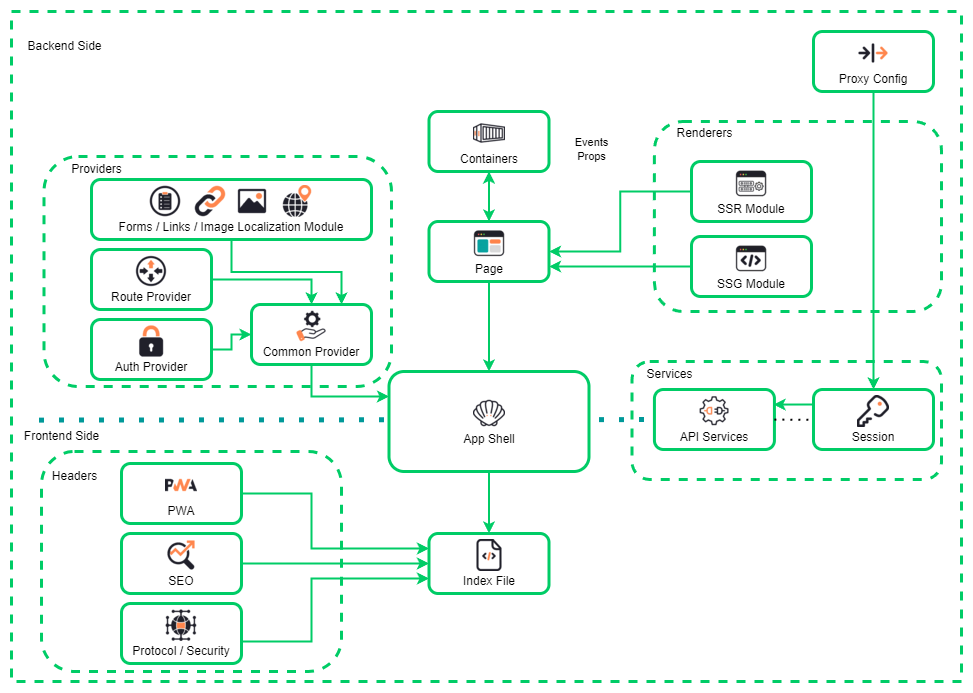
Micro-frontends — splitting one app into independently built and deployed pieces — are usually adopted for the wrong reason. Teams reach for them because the codebase is big, or because the architecture feels elegant. But the problem they actually solve is organisational: multiple teams contending over one deploy pipeline, blocking each other’s releases, and coupling their schedules. If you have that pain, micro-frontends are worth their considerable cost. If you do not — if one team owns the whole app — they add distributed-systems complexity to solve a coordination problem you don’t have. The boundary should follow the org chart, not the tech.
The problem is coordination, not code size
A single team with a big codebase does not have the micro-frontend problem — they have a modularity problem, solvable with good folder structure and boundaries inside one app. The micro-frontend problem appears when independent teams share one deployable: team A’s release is blocked by team B’s failing test, a shared component change needs three teams to agree, and the deploy queue is a bottleneck. Micro-frontends buy independent deployability — each team ships its slice on its own schedule:
// the shell composes independently-deployed pieces at runtime (module federation)
const CartApp = React.lazy(() => import("cart_mfe/App"));   // team B deploys this on its own
// team A's shell doesn't rebuild when team B ships — that decoupling IS the product
The costs are real and distributed
That independence is not free — you take on a distributed system. Shared dependencies must be aligned or duplicated (three copies of React is a real failure mode); a consistent look requires shared design tokens across separately-built apps; cross-MFE communication needs a contract (custom events, a shared store shape); performance suffers if each MFE ships its own framework copy; and debugging spans repos and deploys. These are the same costs as backend microservices, and they are paid whether or not you needed the split:
// the shell must dedupe shared deps or every MFE ships its own React
shared: { react: { singleton: true, requiredVersion: "^19.0.0" } }
Split along teams, and only when the pain is real
The decision rule is organisational. Adopt micro-frontends when multiple teams are genuinely contending over one frontend deploy and that contention is slowing releases — and draw the boundaries along team ownership (Search team owns the Search MFE), so each split maps to a team that can own it end to end. Do not adopt them for a single team, for a modestly-sized app, or because the architecture sounds impressive — there you get the distributed-systems tax with none of the coordination benefit, and plain modular structure inside one app is the better answer. Like backend microservices, micro-frontends are an answer to Conway’s Law, not to line count: match the architecture to the org, split only when teams are stepping on each other, and put the boundaries where the ownership is. The design-micro-frontends exercise is a full rehearsal of exactly that trade-off — when the split is worth it, and where the seams belong.