

SKILL.md for any Agent-Skills-compatible runtime.
npx skills add grvpanchal/elegant --skill ui-props

Props
- Arguments passed into JS components for configuration
- Deliver structural information usable by JS within components
- Define custom behaviors with case-sensitive property values
Key Insight
Props are the contract between a component and its users—they define what data a component accepts, how it behaves, and how it communicates back to parent components. By treating props as an immutable, read-only interface, you create predictable, reusable components that work reliably across your entire application, making component APIs as clear and dependable as function signatures.
Detailed Description
In component-based architecture, props (short for “properties”) serve as the primary mechanism for passing data from parent components to children. They function similarly to function parameters in traditional programming: a parent component provides values through props, and the child component uses those values to render its output. This unidirectional data flow—from parent to child—is fundamental to the Universal Frontend Architecture and creates predictable, debuggable applications.
Props are intentionally immutable within the receiving component. When a component receives props, it cannot modify them directly—this constraint enforces the principle that data flows down the component tree while events flow up. If a child component needs to “change” a prop value, it calls a callback function passed as a prop, which allows the parent to update its state, triggering a re-render with new props. This pattern prevents the chaotic bidirectional data flow that plagues many UI frameworks.
The distinction between props and state is crucial: props are external inputs controlled by parent components, while state is internal data managed by the component itself. A component’s props might include a username from a parent, while its state might track whether a dropdown is open. Props flow down from ancestors, state lives within the component, and together they determine what the component renders.
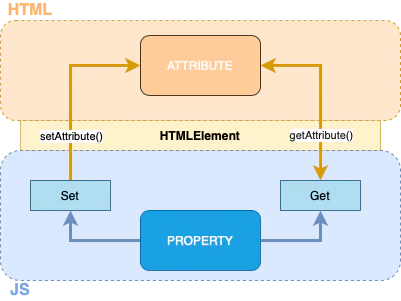
In the context of Web Components and custom elements, props vs attributes becomes important. HTML attributes (strings in markup) get converted to JavaScript properties (any type) on element instances. Modern frameworks abstract this complexity, but understanding the distinction helps when working with native Web Components or debugging framework behavior. Attributes are limited to strings in HTML, while props can be any JavaScript value—objects, arrays, functions.
Props serve as the component’s API, and like any API, should be designed with care. Well-designed props make components flexible without being overwhelming. Too few props make components inflexible and lead to duplication. Too many props create cognitive overload and make components difficult to use. The art lies in finding the right abstractions: provide props for things that vary, use sensible defaults for things that rarely change, and leverage composition (children prop) for flexible content.
Code Examples
Basic Example: Loader props across frameworks
The Loader atom has three props: size, width, color. That’s it — a pure, read-only, defaultable input surface. Here’s the same atom in every chota-* template, showing how each framework declares props, applies defaults, and derives a value from them.
React
// templates/chota-react-redux/src/ui/atoms/Loader/Loader.component.jsx
// Props are plain destructured arguments. Defaults are applied inline
// via ||. No PropTypes needed for a three-prop atom.
import "./Loader.style.css";

export default function Loader({ size, width, color }) {
  return (
    <span
      className="loader"
      style={{
        height: size || "48px",
        width: size || "48px",
        border: `${width || "5px"} solid ${color || "#fff"}`,
        borderBottomColor: "transparent",
      }}
    ></span>
  );
}

// <Loader size="24px" width="3px" color="#333" />
Angular
// templates/chota-angular-ngrx/src/ui/atoms/Loader/Loader.component.ts
// @Input() declares each prop. Defaults live next to the declaration.
// A getter derives the inline style string at render time.
import { Component, Input } from '@angular/core';

@Component({
  selector: 'app-loader',
  standalone: true,
  templateUrl: './Loader.component.html',
  styleUrls: ['./Loader.style.css'],
})
export default class LoaderComponent {
  @Input() size = '48px';
  @Input() width = '5px';
  @Input() color = '#fff';

  get styles() {
    return `height:${this.size};width:${this.size};`
         + `border:${this.width} solid ${this.color};`
         + `border-bottom-color:transparent;`;
  }
}

// Usage: <app-loader size="24px" width="3px" color="#333"></app-loader>
Vue
<!-- templates/chota-vue-pinia/src/ui/atoms/Loader/Loader.component.vue -->
<!-- Props live in the `props:` array (or an object with types/defaults).
     A method on the component derives the style string. -->
<template>
  <span class="loader" :style="getLoaderStyle()"></span>
</template>

<script>
import { defineComponent } from "vue";

export default defineComponent({
  props: ['size', 'width', 'color'],
  methods: {
    getLoaderStyle() {
      return `
        height: ${this.size || '48px'};
        width: ${this.size || '48px'};
        border: ${this.width || '5px'} solid ${this.color || '#fff'};
        border-bottom-color: transparent;
      `;
    },
  },
});
</script>

<!-- Usage: <Loader size="24px" width="3px" color="#333" /> -->
Web Components
// templates/chota-wc-saga/src/ui/atoms/Loader/Loader.component.js
// The haunted function receives props as its first argument, the same as
// a React function component. Lit-html template tagging builds the DOM.
import { html } from "lit";
import style from "./Loader.style.js";
import useComputedStyles from "../../../utils/theme/hooks/useComputedStyles";

export default function Loader({ size, width, color }) {
  useComputedStyles(this, [style]);
  return html`
    <span
      class="loader"
      style=${`
        height: ${size || "48px"};
        width: ${size || "48px"};
        border: ${`${width || "5px"} solid ${color || "#fff"}`};
        border-bottom-color: transparent;
      `}
    ></span>
  `;
}

// Usage: <app-loader size="24px" width="3px" color="#333"></app-loader>
// Complex values (objects, functions) must be passed as properties with `.`:
//   <app-loader .size=${size} .color=${color}></app-loader>
Three takeaways the tabs make obvious:
- Where defaults live. React puts them inline (
size || "48px"). Angular puts them on the@Input()declaration. Vue’s array form forces them into the method body; its object form would let you declare defaults on the prop. Haunted/WC uses the same inline-||pattern React does. - How the DOM reads props. React / Vue / haunted bind them directly. Angular separates template (
Loader.component.html) from class — the getter is consumed by the template via[style]="styles". - HTML attributes vs JS properties in WC. Strings work as attributes (
size="24px"). Complex values (functions, objects) need the.prop=${value}form, or Lit will stringify them.
Practical Example: Props with TypeScript and Validation
Real-world props with type safety and documentation:
// UserCard.tsx - Component with TypeScript props

import React from 'react';
import './UserCard.css';

// Define prop types interface
interface UserCardProps {
  // Required props (no ? mark)
  user: {
    id: string;
    name: string;
    email: string;
    avatar?: string;
  };

  // Optional props (with ? mark)
  showEmail?: boolean;

  // Callback props
  onEdit?: (userId: string) => void;
  onDelete?: (userId: string) => void;

  // Props with default values
  variant?: 'compact' | 'detailed';
  elevated?: boolean;
}

// Component with destructured props and defaults
const UserCard: React.FC<UserCardProps> = ({
  user,
  showEmail = true,
  onEdit,
  onDelete,
  variant = 'compact',
  elevated = false
}) => {
  return (
    <div className={`user-card user-card--${variant} ${elevated ? 'user-card--elevated' : ''}`}>
      <div className="user-card__avatar">
        {user.avatar ? (
          <img src={user.avatar} alt={user.name} />
        ) : (
          <div className="user-card__avatar-placeholder">
            {user.name.charAt(0)}
          </div>
        )}
      </div>

      <div className="user-card__info">
        <h3 className="user-card__name">{user.name}</h3>
        {showEmail && (
          <p className="user-card__email">{user.email}</p>
        )}
      </div>

      {(onEdit || onDelete) && (
        <div className="user-card__actions">
          {onEdit && (
            <button onClick={() => onEdit(user.id)}>
              Edit
            </button>
          )}
          {onDelete && (
            <button onClick={() => onDelete(user.id)}>
              Delete
            </button>
          )}
        </div>
      )}
    </div>
  );
};

export default UserCard;
Usage with type checking:
import React from 'react';
import UserCard from './UserCard';

const UserList = () => {
  const users = [
    { id: '1', name: 'Alice Johnson', email: 'alice@example.com', avatar: '/alice.jpg' },
    { id: '2', name: 'Bob Smith', email: 'bob@example.com' }
  ];

  const handleEdit = (userId: string) => {
    console.log('Editing user:', userId);
  };

  const handleDelete = (userId: string) => {
    if (confirm('Are you sure?')) {
      console.log('Deleting user:', userId);
    }
  };

  return (
    <div className="user-list">
      {users.map(user => (
        <UserCard
          key={user.id}
          user={user}
          showEmail={true}
          onEdit={handleEdit}
          onDelete={handleDelete}
          variant="detailed"
          elevated
        />
      ))}
    </div>
  );
};
Advanced Example: Props Spreading, Children, and Composition
Sophisticated props patterns for flexible components:
// Card.js - Flexible component with composition

import React from 'react';
import './Card.css';

const Card = ({
  children,           // Special prop for nested content
  header,             // Named slot
  footer,             // Named slot
  className = '',     // Additional CSS classes
  ...restProps        // Spread remaining props to root element
}) => {
  return (
    <article
      className={`card ${className}`}
      {...restProps}    // Passes onClick, data-*, aria-*, etc.
    >
      {header && (
        <header className="card__header">
          {header}
        </header>
      )}

      <div className="card__body">
        {children}      {/* Flexible content slot */}
      </div>

      {footer && (
        <footer className="card__footer">
          {footer}
        </footer>
      )}
    </article>
  );
};

export default Card;
Advanced usage patterns:
import React from 'react';
import Card from './Card';
import Button from './Button';

const ProductPage = () => {
  return (
    <div>
      {/* Pattern 1: Using children prop */}
      <Card>
        <h2>Simple Content</h2>
        <p>This goes in the children slot.</p>
      </Card>

      {/* Pattern 2: Using named slots (header, footer) */}
      <Card
        header={<h2>Product Details</h2>}
        footer={
          <div>
            <Button label="Add to Cart" variant="primary" />
            <Button label="Save for Later" variant="secondary" />
          </div>
        }
      >
        <p>Product description goes here.</p>
        <span>$99.99</span>
      </Card>

      {/* Pattern 3: Props spreading for accessibility */}
      <Card
        onClick={() => console.log('Card clicked')}
        role="button"
        tabIndex={0}
        aria-label="Product card"
        data-product-id="123"
        className="product-card"
      >
        <h3>Clickable Card</h3>
      </Card>

      {/* Pattern 4: Render props pattern */}
      <DataProvider
        render={(data) => (
          <Card>
            <h3>{data.title}</h3>
            <p>{data.description}</p>
          </Card>
        )}
      />
    </div>
  );
};
Attributes and properties are tricky to grasp from code alone; it gets clearer once you see them working in a real custom element. The trick to achieving reflection is linking get/set property methods to get/set attribute methods.
This schema clarifies how attributes and properties reflection works:
Read more about the difference between props and attributes.
Common Mistakes
1. Mutating Props Directly
Mistake: Attempting to modify props within the component.
// ❌ BAD: Mutating props
const UserProfile = ({ user }) => {
  // Trying to modify props directly
  user.name = user.name.toUpperCase();  // ERROR! Props are read-only

  return <h1>{user.name}</h1>;
};
// ✅ GOOD: Compute derived values without mutation
const UserProfile = ({ user }) => {
  // Create new value without mutating props
  const displayName = user.name.toUpperCase();

  return <h1>{displayName}</h1>;
};

// ✅ GOOD: Use state if you need to modify
const UserProfile = ({ user: initialUser }) => {
  const [user, setUser] = useState(initialUser);

  const handleNameChange = (newName) => {
    setUser({ ...user, name: newName });  // Update state, not props
  };

  return (
    <div>
      <h1>{user.name}</h1>
      <input value={user.name} onChange={(e) => handleNameChange(e.target.value)} />
    </div>
  );
};
Why it matters: Props are immutable by design. Mutating them breaks React’s reconciliation, causes unpredictable renders, and violates the unidirectional data flow principle. See State for managing changeable data.
2. Prop Drilling Through Multiple Levels
Mistake: Passing props through many intermediate components that don’t use them.
// ❌ BAD: Prop drilling through unnecessary levels
const App = () => {
  const user = { name: 'Alice', role: 'admin' };
  return <Dashboard user={user} />;
};

const Dashboard = ({ user }) => {
  return <Layout user={user} />;  // Just passing through
};

const Layout = ({ user }) => {
  return <Sidebar user={user} />;  // Just passing through
};

const Sidebar = ({ user }) => {
  return <UserMenu user={user} />;  // Just passing through
};

const UserMenu = ({ user }) => {
  return <div>{user.name}</div>;  // Finally using it!
};
// ✅ GOOD: Use Context API for deeply nested data
import React, { createContext, useContext } from 'react';

// Create context
const UserContext = createContext(null);

const App = () => {
  const user = { name: 'Alice', role: 'admin' };

  return (
    <UserContext.Provider value={user}>
      <Dashboard />
    </UserContext.Provider>
  );
};

const Dashboard = () => <Layout />;  // No props needed
const Layout = () => <Sidebar />;    // No props needed
const Sidebar = () => <UserMenu />;  // No props needed

const UserMenu = () => {
  const user = useContext(UserContext);  // Access directly
  return <div>{user.name}</div>;
};
Why it matters: Prop drilling creates fragile code where intermediate components become coupled to data they don’t use. Context, composition, or state management libraries (Redux, Zustand) solve this more elegantly.
3. Not Using Default Props
Mistake: Handling undefined props with verbose conditional logic.
// ❌ BAD: Defensive checks everywhere
const Button = (props) => {
  const label = props.label ? props.label : 'Click Me';
  const variant = props.variant ? props.variant : 'primary';
  const disabled = props.disabled !== undefined ? props.disabled : false;

  return (
    <button
      className={`btn btn--${variant}`}
      disabled={disabled}
    >
      {label}
    </button>
  );
};
// ✅ GOOD: Default parameter values (modern JavaScript)
const Button = ({
  label = 'Click Me',
  variant = 'primary',
  disabled = false,
  onClick
}) => {
  return (
    <button
      className={`btn btn--${variant}`}
      disabled={disabled}
      onClick={onClick}
    >
      {label}
    </button>
  );
};

// ✅ GOOD: TypeScript with default props
interface ButtonProps {
  label?: string;
  variant?: 'primary' | 'secondary' | 'danger';
  disabled?: boolean;
  onClick?: () => void;
}

const Button: React.FC<ButtonProps> = ({
  label = 'Click Me',
  variant = 'primary',
  disabled = false,
  onClick
}) => {
  // Component implementation
};
Why it matters: Default props make components easier to use, reduce boilerplate, and make the API more discoverable. Users can see default behavior without reading documentation.